
Visitors to London who are also transport enthusiasts (‘railfans’) sometimes ask for advice as to the ‘best’ things to see on London’s railway network. This page is part of a guide which aims to answer that question.
If this is the first time you have reached these pages then it is best to go to the Opening Page which sets the scene, explains the difference between the small and the large profile trains, offers advice on the best type of ticket to buy and photography tips.
Alternatively, it is possible to view everything on one page
|
| Metropolitan Line |
|
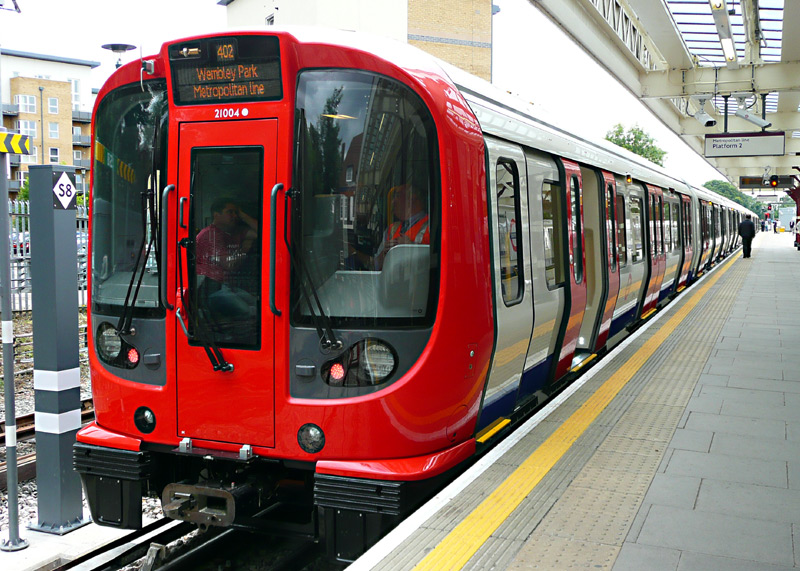

These trains have 3 sets of opening doors per car, air-conditioning and internally are of a walk-through design.
In central London the Metropolitan line has been converted to a GoA 2 (Grade of Automation level 2) semi-automatic train control system (STO) whereby the trains travel automatically from station to station but a human train driver is always present at the front of the train, with duties that include door closing and initiating station departure. In north London the trains are still driven in the traditional way by a real human train driver.
Although they all look the same there are two different types of S Stock trains.
The S7 variant have 7 cars (coaches / carriages) with only longitudinal seating.
These are used on the Circle, District and Hammersmith & City lines.
The S7+1 variant have 8 cars with only longitudinal seating.
There are very few of these trains - which are only used on the Metropolitan line.
The S8 variant have 8 cars with a mix of longitudinal and facing seats.
These are only used on the Metropolitan line.
Doors Auto-Open / Auto-Close:
At stations the passenger doors are opened by the train driver and (if not closed earlier) automatically close after 45 seconds - but are easily
re-opened using the push buttons. (Except for Baker Street, where they are open all the time).
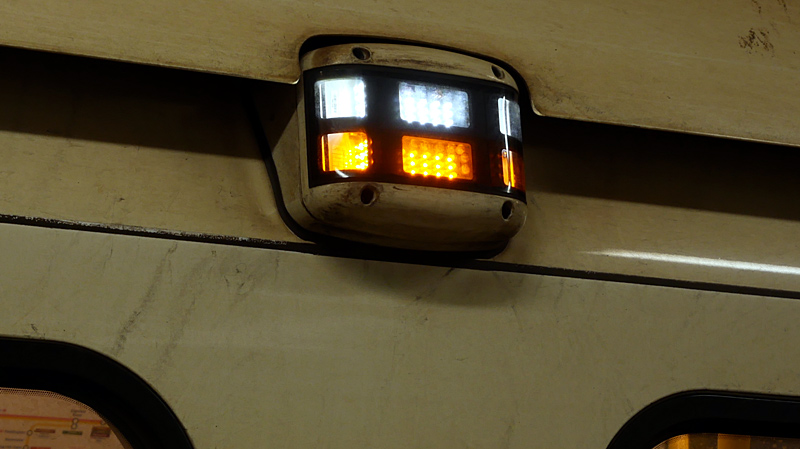
Lights on every S Stock car side:
Amber: Passenger doors are unlocked / open
White: It is time for the doors to close and the train to depart
(white - only where there is computerised train control).
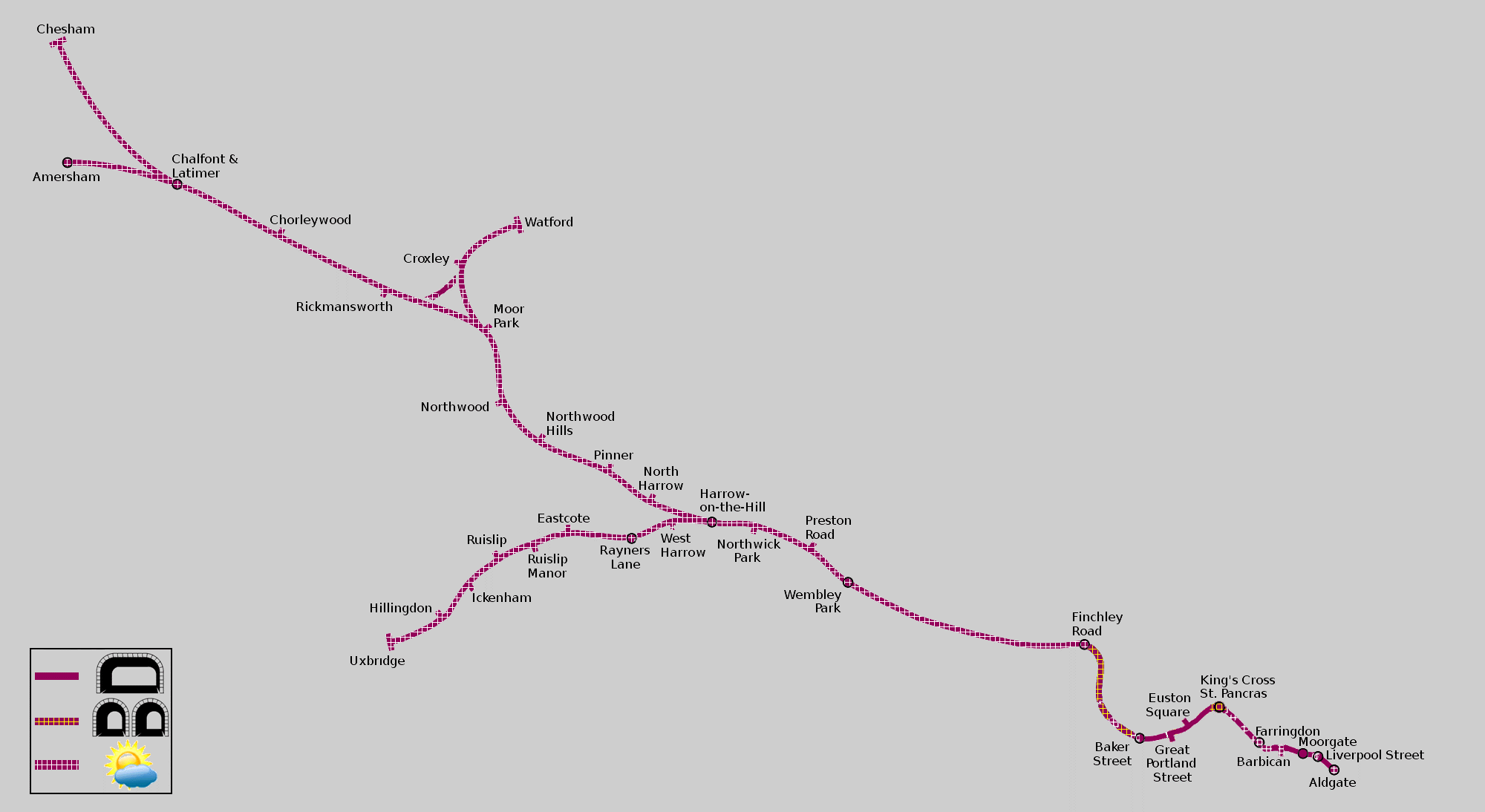
Map modified by me, original source & license: Ed g2s / Wikipedia encyclopædia CC BY-SA 3.0 http://commons.wikimedia.org/wiki/File:Metropolitan_Line.svg
Click map to see larger version in a new window! 
| Below / Above Ground |
In tunnel from Aldgate to Baker Street, except for Aldgate, Liverpool Street (part only), Farringdon and Barbican stations. The tunnels between Kings Cross and Barbican stations include some short open air sections which date from the days of steam trains when ventilation openings were needed to allow the smoke to clear.
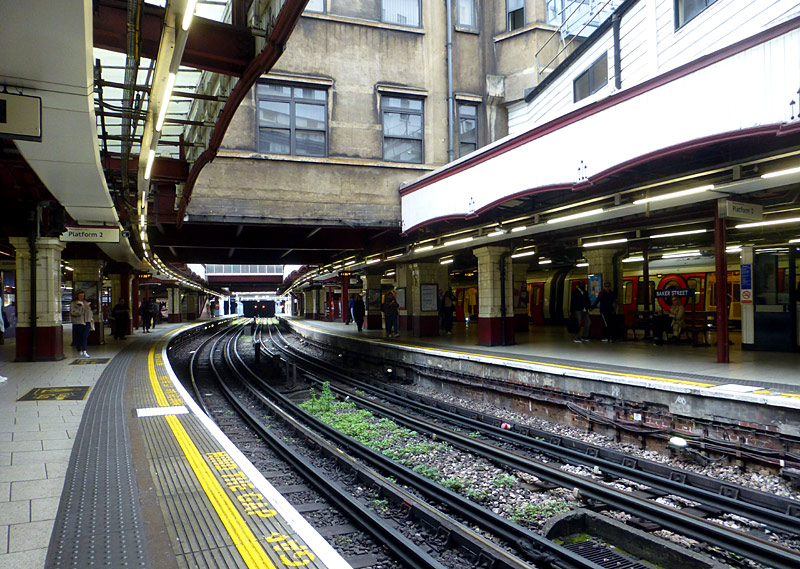
At Baker Street Metropolitan line trains use platforms 1-4 which are partly in the open. Baker Street - Finchley Road is mostly in tunnel but with some short open air sections. Finchley Road station is above ground and the rest of the line all the way to Amersham, Watford and Uxbridge is above ground - except for a short tunnel on what is known as the North Curve, which is the direct route between Croxley and Rickmansworth. However this section of track is not normally used by passenger trains.
| Claustrophobia |
 Information for people who are happy to travel on trains which are above ground but experience claustrophobia
when in tunnels.
Information for people who are happy to travel on trains which are above ground but experience claustrophobia
when in tunnels.
The Metropolitan line has a mix of single track and twin track tunnels:
* Between Baker Street and Aldgate stations most of the tunnels are wide enough for two tracks - one train in each direction.
However, at Kings Cross St Pancras station and for short distances either side of the station
the tunnels are single track.
*Between Baker Street and Finchley Road stations the route mostly comprises single track tunnels although there are a few places which have either twin track tunnels or are in open air.
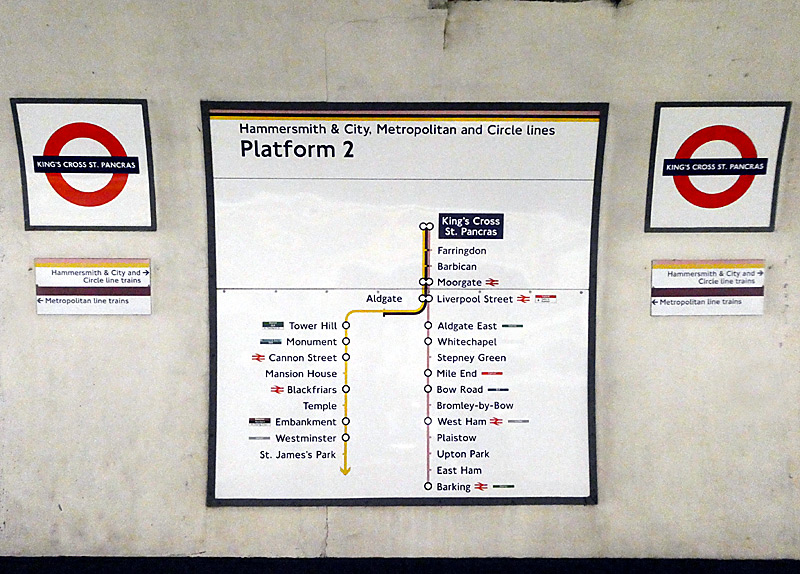
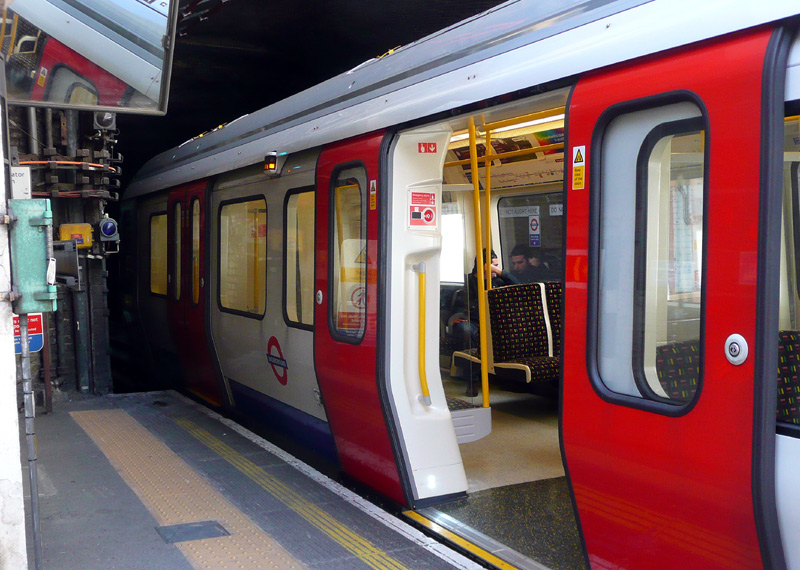
so sometimes the doors at the end of the train do not open and passengers wishing to alight here must walk through the train
to a pair of doors which do open.
| General Information |
The full route of the historic Metropolitan Railway as it was when it first opened in 1863 is now served by the Hammersmith & City line and looked at on the Hammersmith & City line page.
In Central London the historic Metropolitan Railway also built the routes Edgware Road - South Kensington (via High Street Kensington) and Moorgate - Aldgate - (Tower Hill). These sections of railway were built for was originally called the Inner Circle* and are mostly looked at on the Circle line page.
*In the steam train era London had four 'Circle' lines, although only one of them actually formed a complete circle around London.
The route north of Baker Street is mostly shared with other services and is looked at in greater detail in the Shared Service Routes page.
The information below only explores the Metropolitan line as it is today, and only briefly because the majority of the line is a long way out from Central London in fares zones 4 - 9.
Do look at the 'next train' describers before boarding a train, as some journeys can take you a long way without stopping! After Baker Street all trains stop at Finchley Road and Wembley Park (the latter northbound only), but after that some trains may stop next at Harrow-on-the-Hill, which is in zone 5 and then Moor Park, which is a zones 6 & 7 boundary station.
Several stations built by the former Metropolitan Railway feature a broadly similar grandiose distinctive design theme, as seen in the Edgware Road image right.. These include:Aldgate, Farringdon, Great Portland Street,
Paddington (the Bakerloo, District and Circle lines station on Praed Street)
Willesden Green (nowadays normally served by the Jubilee line).
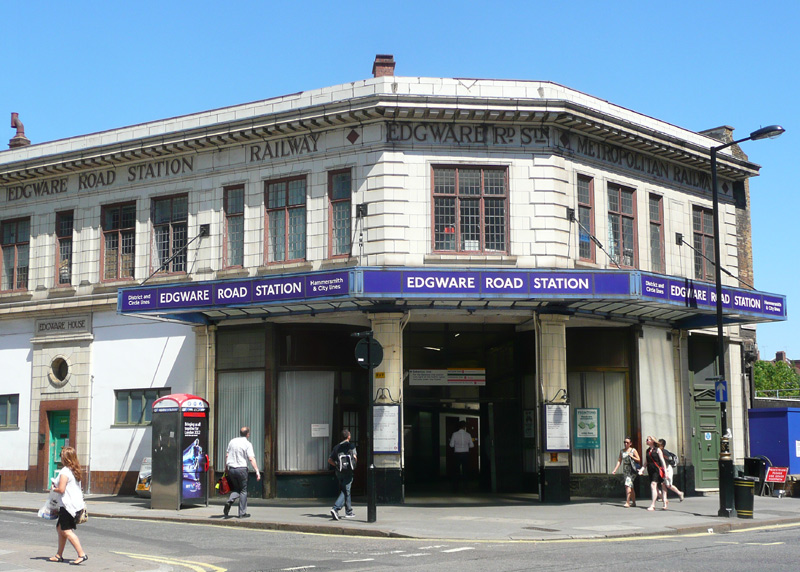
Typical grandiose Metropolitan Railway styled station building.
This is Edgware Road (subsurface) station which nowadays is
served by Hammersmith & City, Circle and District line trains.
Baker Street - Finchley Road has four tracks (two Metropolitan line, two Jubilee line), but as everything is in tunnels this can not be seen.
When travelling through the Metropolitan line's tunnels between Baker Street and Finchley Road you may spot the remains of several stations. These stopped being used in 1939 when a new deep-level tube-train service (nowadays part of the Jubilee line) was opened. The original intention was to retain these stations for 'special occasions' (such as cricket at Lords) but in the event the onset of WW2 saw them being permanently closed.
Metropolitan line trains also used to call at stations between Finchley Road and Wembley Park, this too stopped (on a full-time daily basis) in 1939 when the tube trains took over the Stanmore service. However early morning / late evening Metropolitan line trains continued to call at all these intermediate stations until the Jubilee line was resignalled with a new computerised signalling system in circa 2010. Nowadays when Jubilee line services are disrupted Metropolitan line trains sometimes also call at Neasden and Willesden Green stations, this is possible because these two stations also have dedicated Metropolitan line platforms.
If travelling to stations beyond Harrow-On-The-Hill you can also travel on the diesel Chiltern Railways trains from London Marylebone station, changing en route if required. Make sure to catch a train travelling to Aylesbury via Amersham and that it calls at the station where you want to alight! Travelcard and PAYG tickets can be used on these trains - but only as far as Amersham.
Between Harrow-On-The-Hill and Amersham the Chiltern and (some) Metropolitan trains use the same tracks and operate a joint service. Chiltern Railway trains typically include toilets, seats with tables and even laptop power sockets.
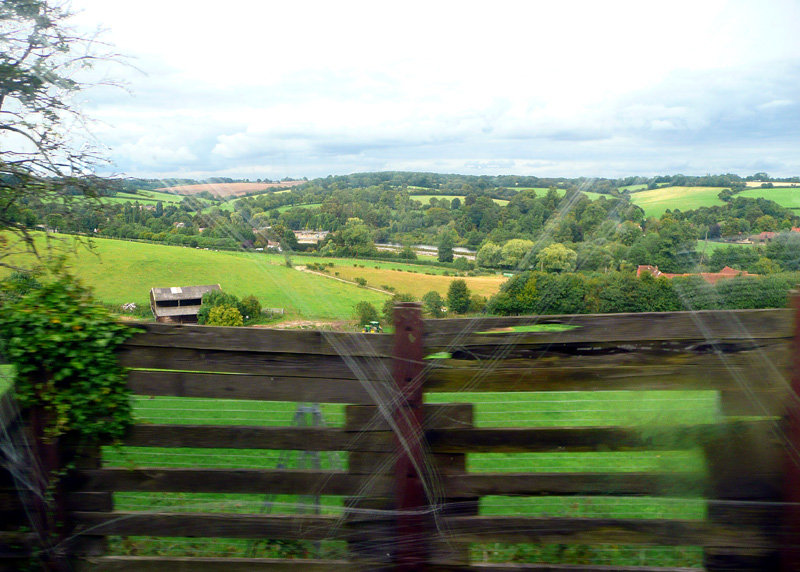
Be aware that these stations are a long way away - even with 'fast' trains Amersham and Chesham are about an hour (60 minutes) from Central London (Aldgate). Getting to Chesham used to require a change of train at Chalfont & Latimer, but since 2010 almost all trains travel through to Baker Street (although it is usually faster to catch a Chiltern Railways train from Marylebone and change at Chalfont & Latimer). Chesham is a nice small town with a pedestrianised shopping street a few minutes walk from the station and the rural countryside scenery out the train's window is very pleasant.
Fares Information
If you are travelling to any station beyond Moor Park note that these places are outside zone 6 so if you have a Travelcard ticket it needs to be valid for zone 7
- and depending on your ultimate destination possibly also zones 8 and 9.
Because the cost of paper one-day Travelcards for these zones is ‘very expensive’ it is usually much cheaper to pay fares using ‘Oyster or contactless PAYG’. Unfortunately this means that you will be subject to journey time limits, so you should not spend too long at stations watching trains. One possible alternative solution is to use PAYG in one direction and buy a 'paper' single ticket in the other direction. Single journey paper tickets are also not cheap - but they do not have journey time limits. Of course you must only travel in the correct direction (ie: no backtracking) and should not break your journey to leave the station.
If you do wish to make short journeys and leave the stations then paying individual fares for each journey using PAYG will be the most cost effective solution - and you might even reach the daily fares cap, which will mean that the the rest of your travel that day will be 'free'. Note that on Monday - Friday journeys which start between 4pm and 7pm (16:00 and 19:00) are more expensive, although this will not matter if you reach the daily fares cap.
It is also worth remembering that if you have a BritRail pass, Eurail pass or an All Line Rover then these can be used at any station that is served by Chiltern Railways trains. With these tickets it is best to only travel on Chiltern Railways diesel trains, as they may not be valid on Underground trains.
As these stations are outside of London very few buses will accept Oyster cards and the bus fares might be higher.
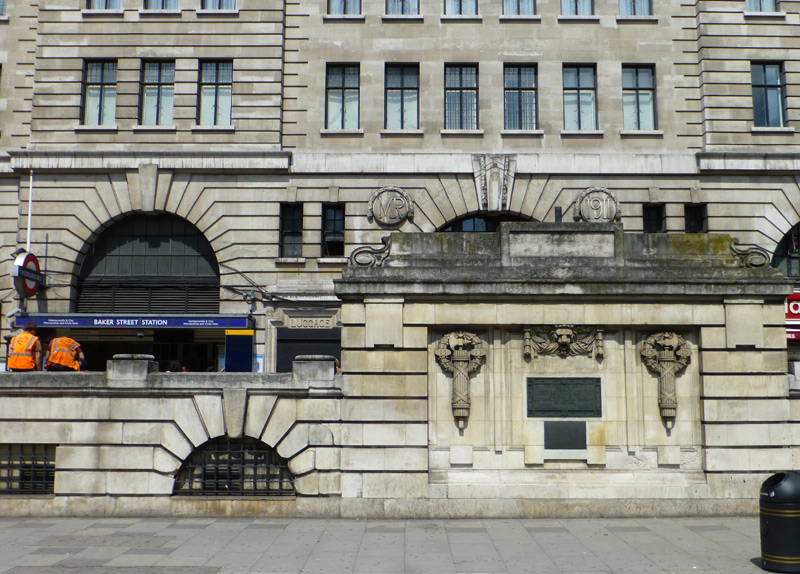
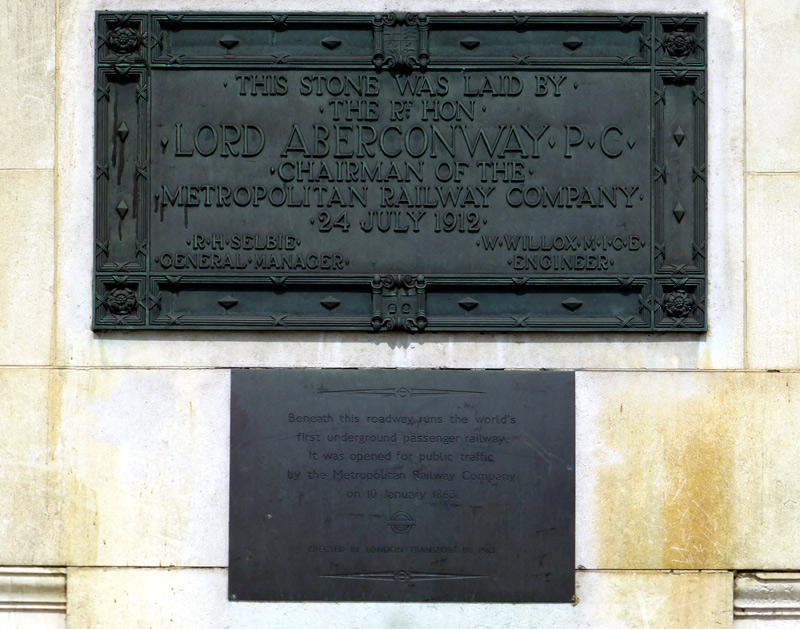
These views show the main station frontage (which was rebuilt in 1911) as seen from the Marylebone Road and a closer view of the plaques.
Clicking this link
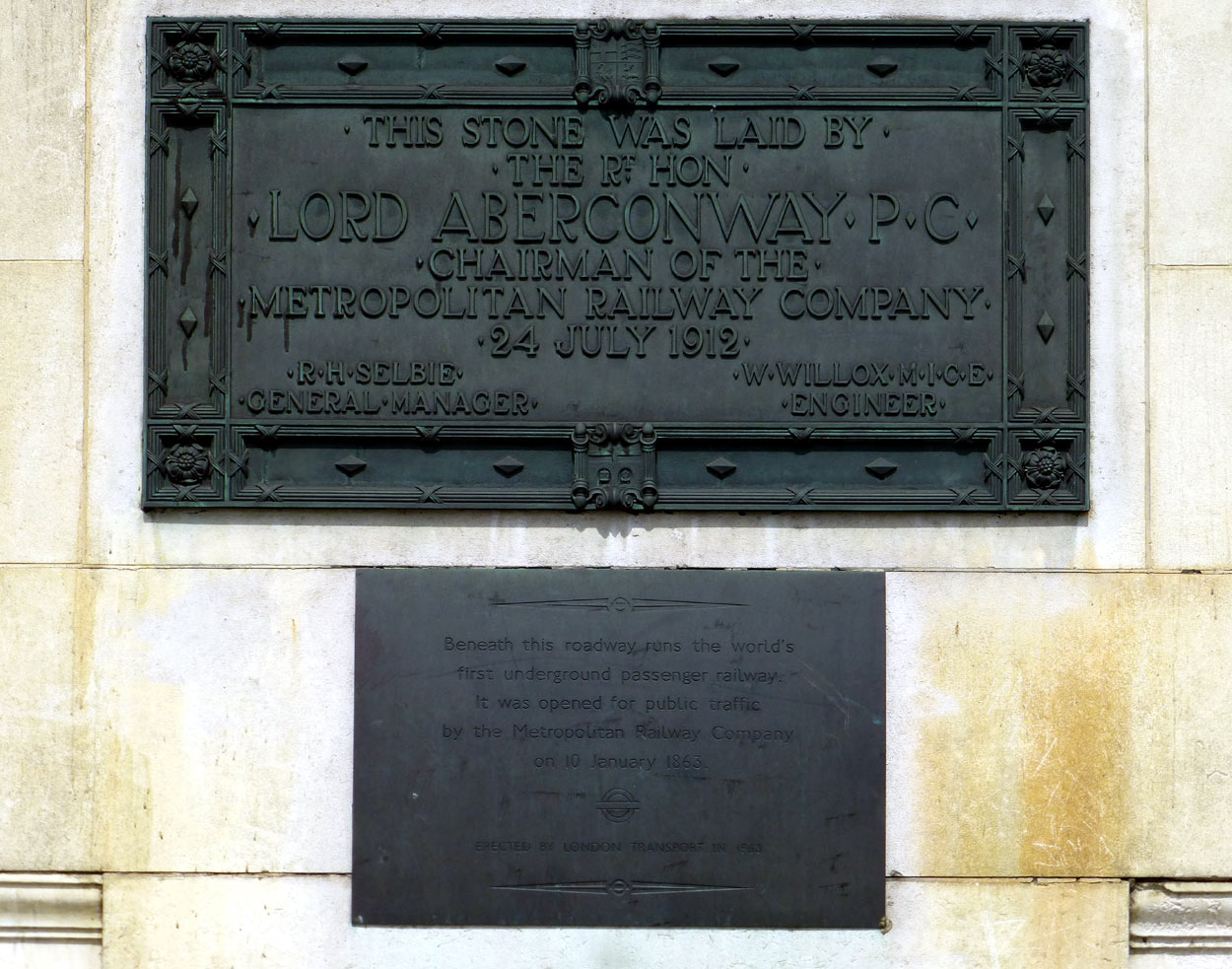 will open (in a new window) a very large version of the image on the right so that the writing can be read.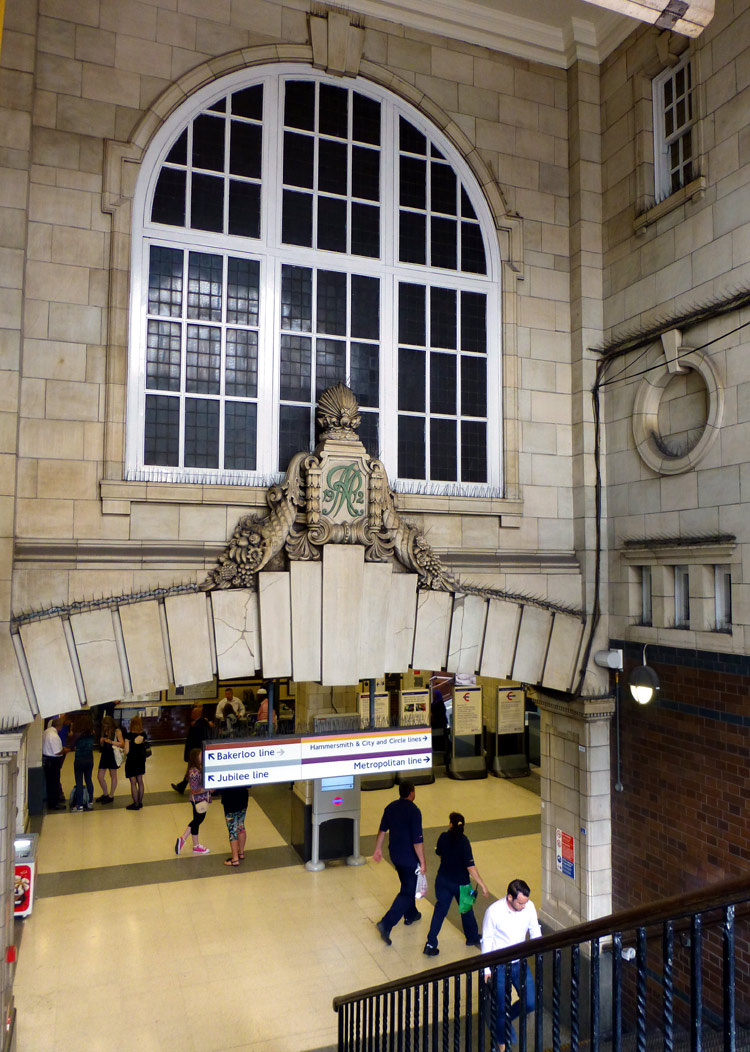
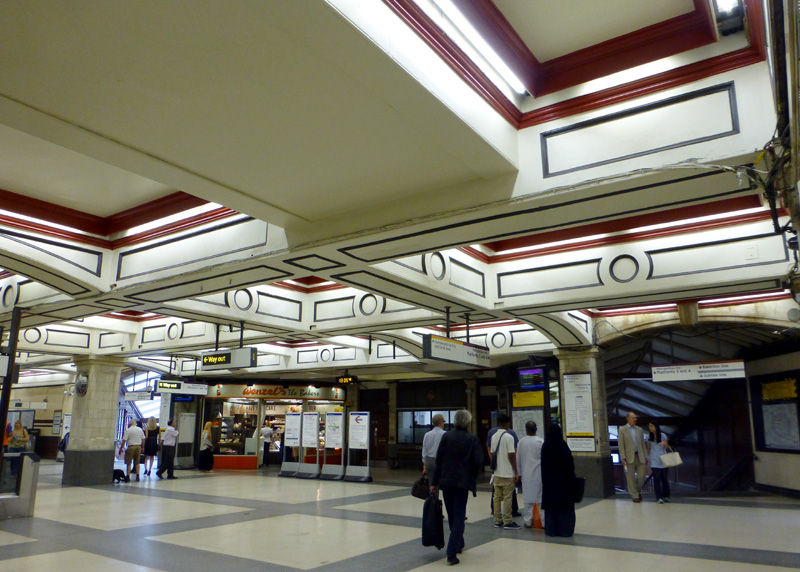
leads to the Metropolitan line ticket hall.
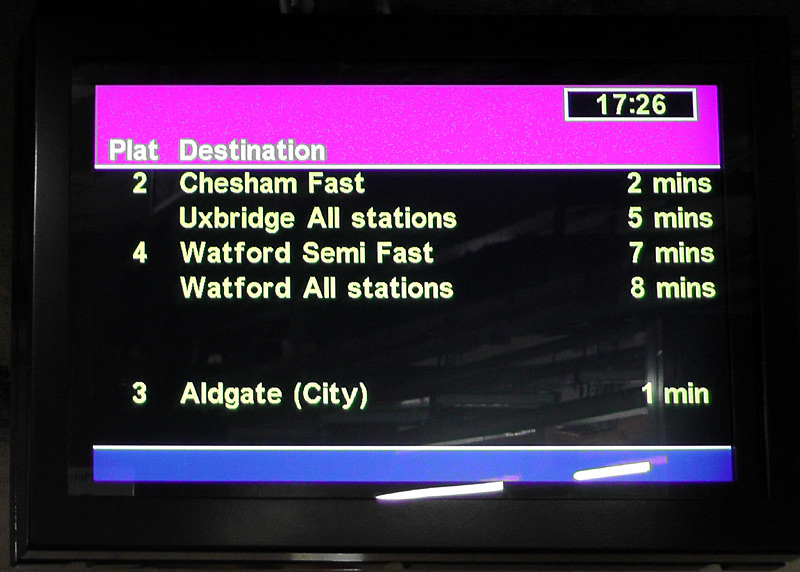
The standing passengers are waiting to see from which platform their trains will depart - trains to Amersham, Chesham, Watford and Uxbridge usually depart from platform Nos. 1, 2, 4.

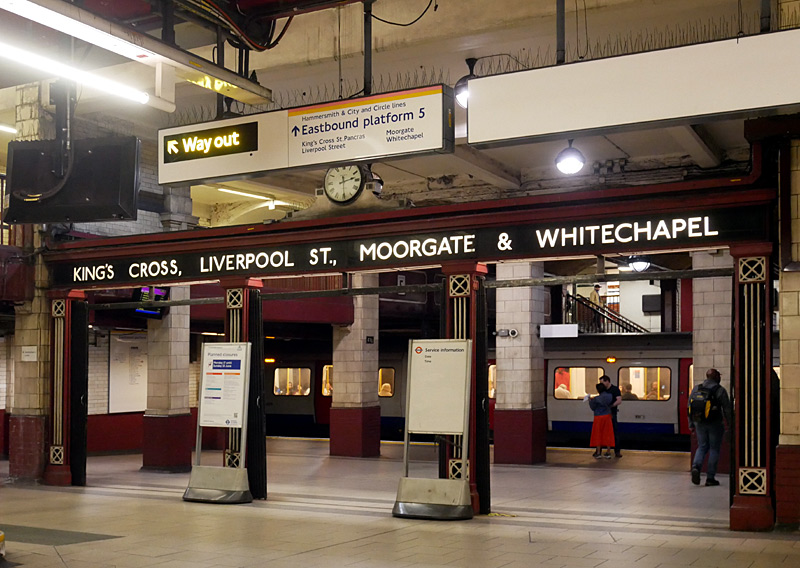
In some ways this can be seen as an entrance portico, with the names of stations served sometimes being changed to reflect changes in the routes and destinations served as the service devolved over the years. This structure includes sliding metal gates so that part of the station can be sealed-off, as required.
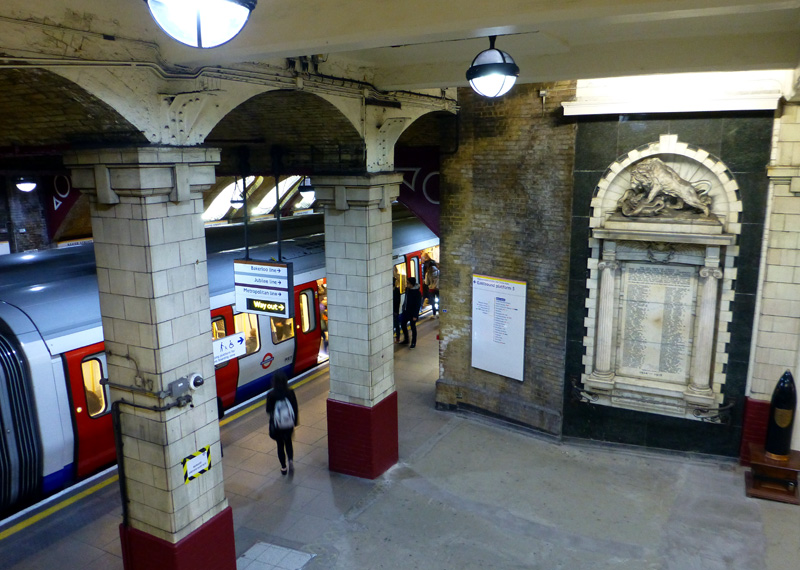
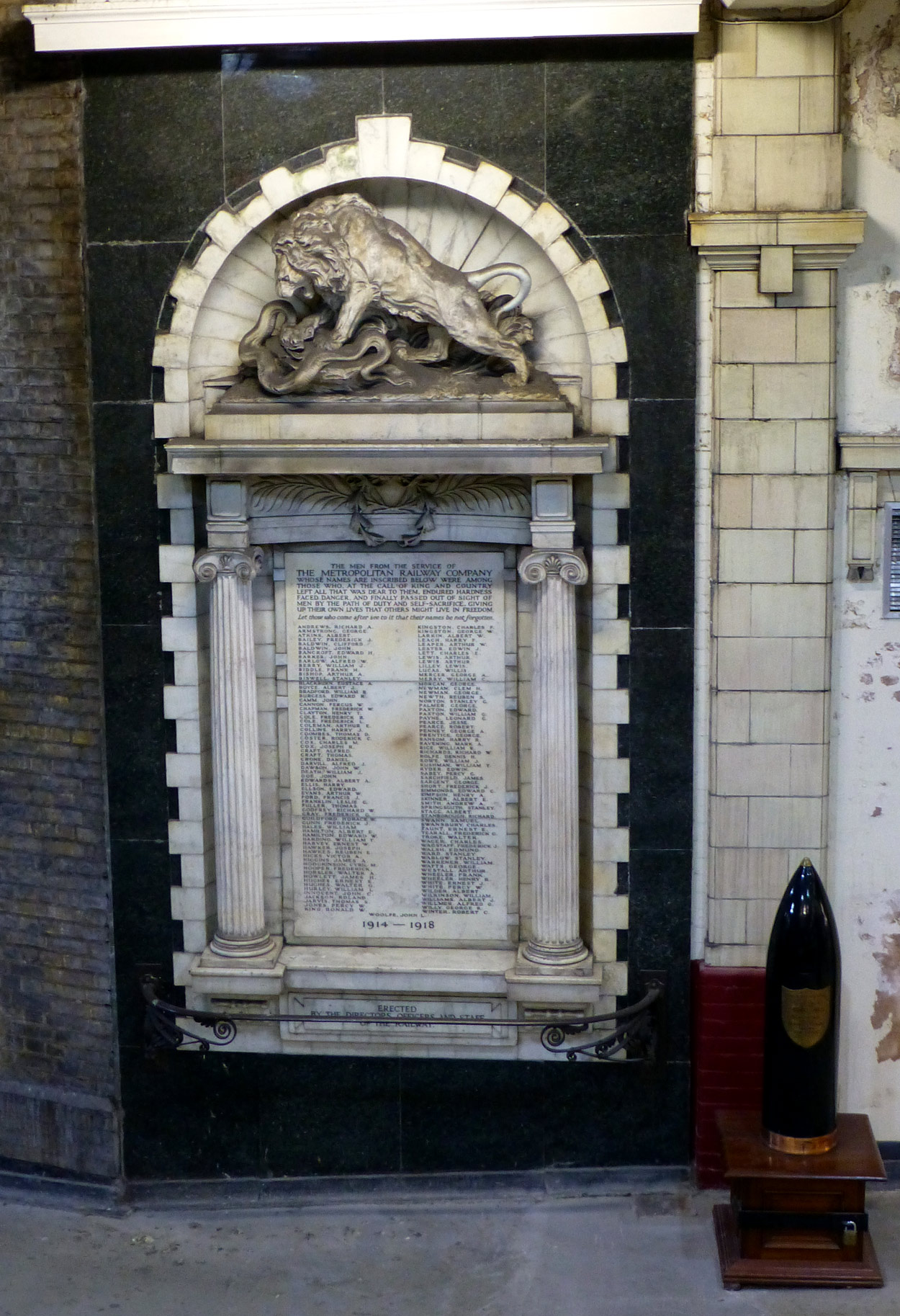
Clicking this link
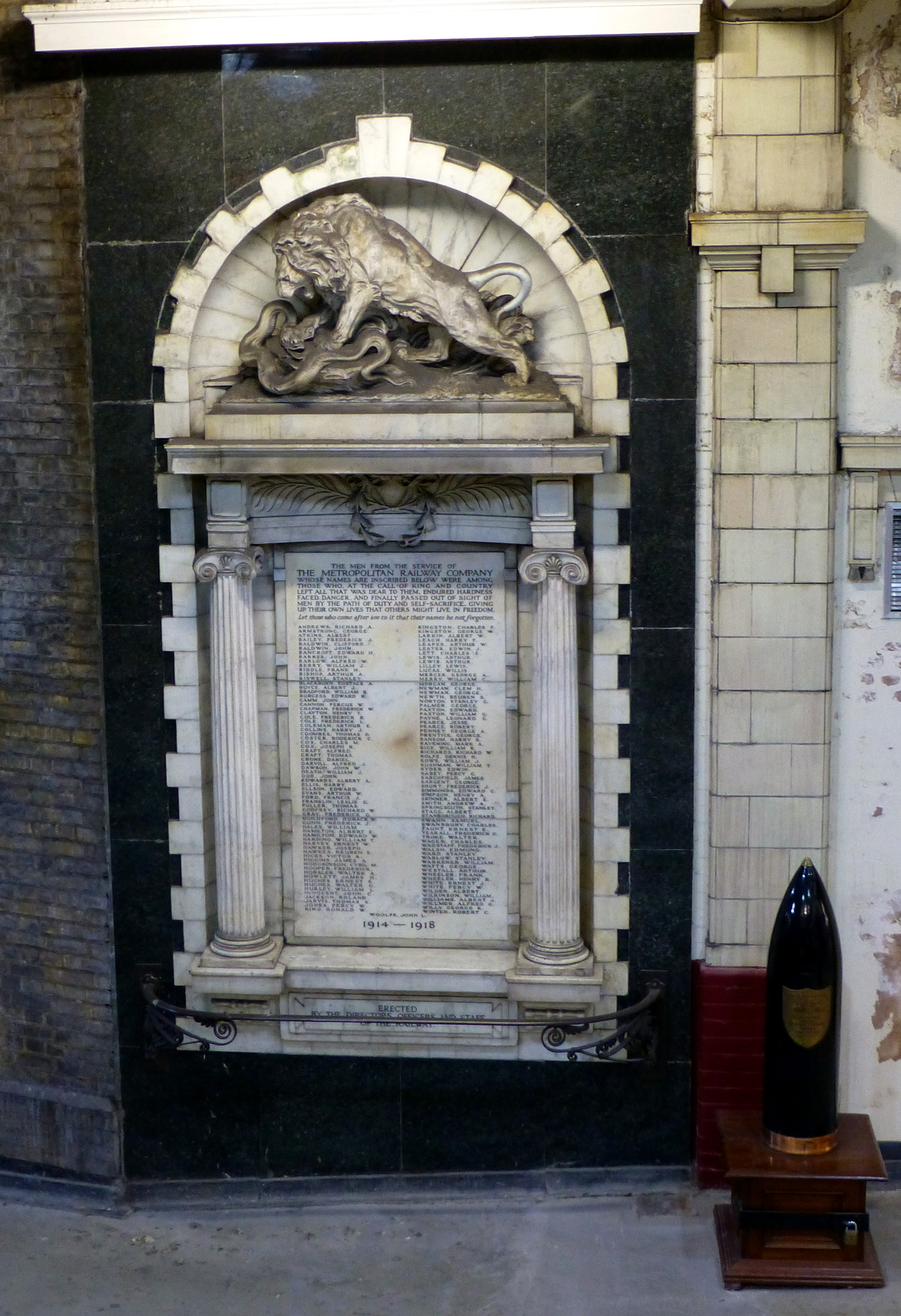 will open (in a new window) a very large version of the image on the right so that the names of the deceased can be read.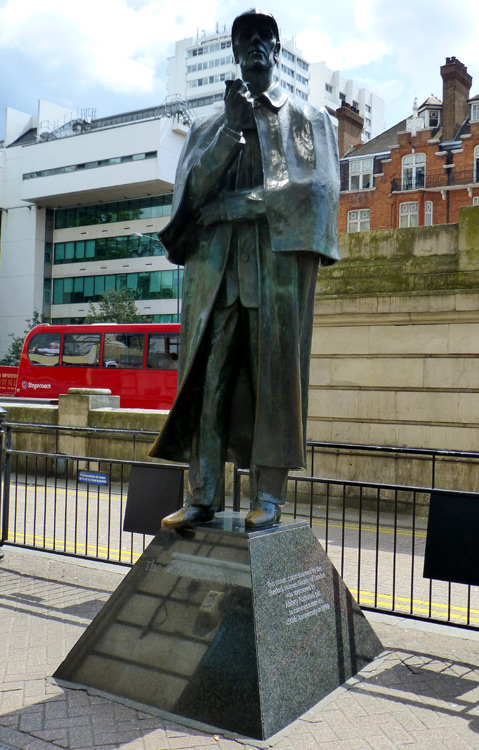
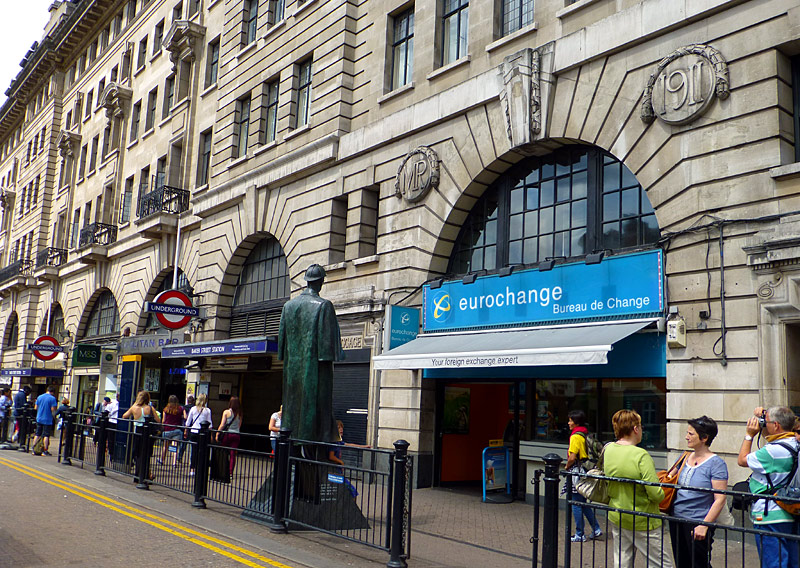
Because of the direction of the sun it is often easier to photograph the back of the statue than the front.
Places where I sometimes go to watch trains on this route include the car park next to the northbound platform at Chorleywood and the road bridges near this station. If using Oyster PAYG as a ticketing solution then remember to 'touch-out' on the card reader before leaving the station - the exit to the car park has a card reader for this very purpose. If it does not register your exit then visit the ticket office and seek help.
I also like to go to Rickmansworth, the shopping street is near the station (turn right out of the station and walk though the road / pedestrian underpass below the railway) and I sometimes watch trains from the top floor of the car park at the Waitrose food store (keep walking past the underpass). The photograph (below-right) was taken from a footbridge to the south of the station - although there are railings I found a small gap which made this view possible.
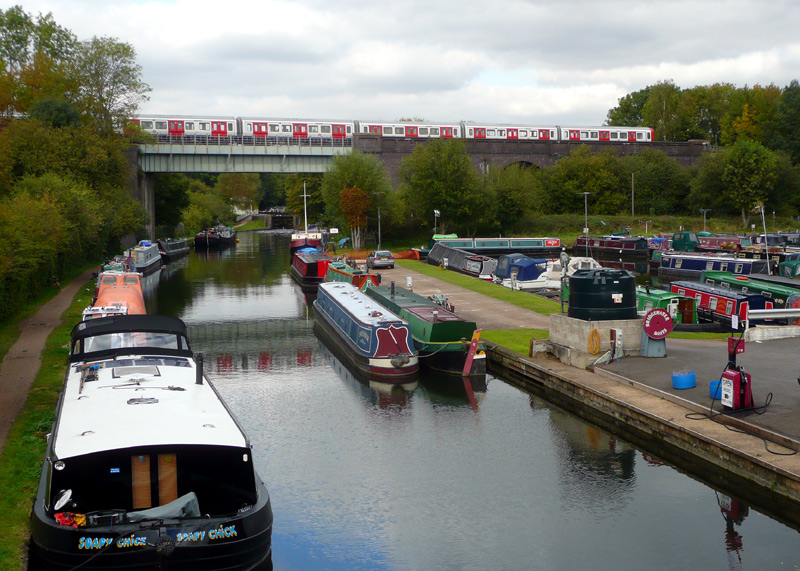
the Grand Union canal near to Watford (Met) station.
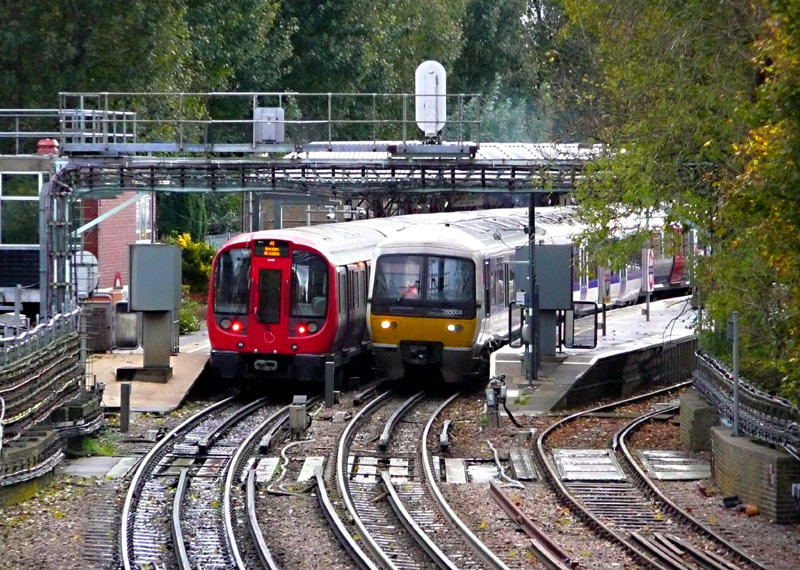
Marylebone and Metropolitan line S stock train heading
for Amersham pass at Rickmansworth station.
The route to Uxbridge has a mix of stations, Ruislip is an older Victorian-era station whilst Hillingdon is modern with lots of glass - and peeling paint. Rayners Lane and Uxbridge are 1930’s ‘Art Deco’. Services are shared with the Piccadilly line but note that the journey (from Kings Cross station) to Uxbridge takes about 20 minutes longer on the Piccadilly line.
Chiltern Railways trains can be used as part of a journey, just for the ride experience, eg: for a trip to the large town at Uxbridge. Of course you will need to change trains at Harrow-on-The-Hill and complete the journey by Metropolitan line train.
You will also need to change trains at Harrow-on-The-Hill if going to Watford, as trains operated by Chiltern Railways no longer call at Moor Park. Also, the Metropolitan line station at Watford is not near the town centre - when this line was built Watford station was designed as a through station and the Metropolitan Railway bought a building in the town centre to use as a terminus station but the extension to the town centre was never built.
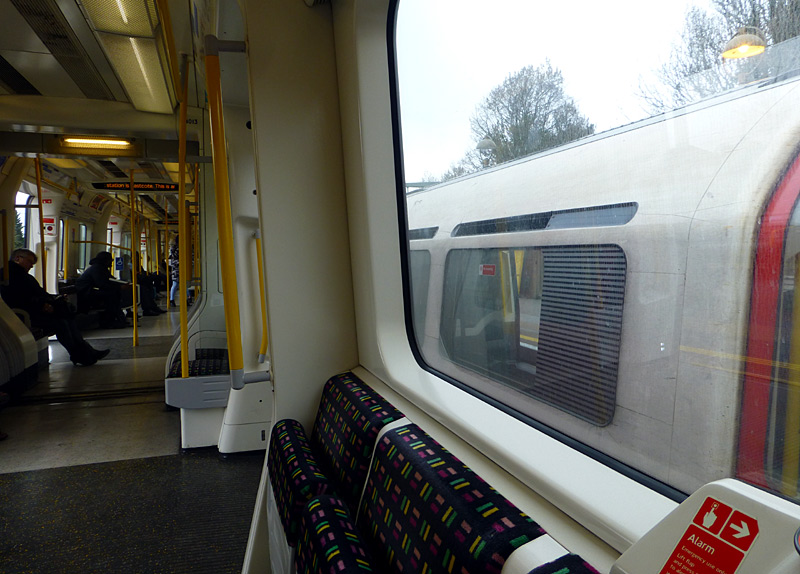
a Piccadilly line tube train somewhere on the shared route
between Rayners Lane and Uxbridge.
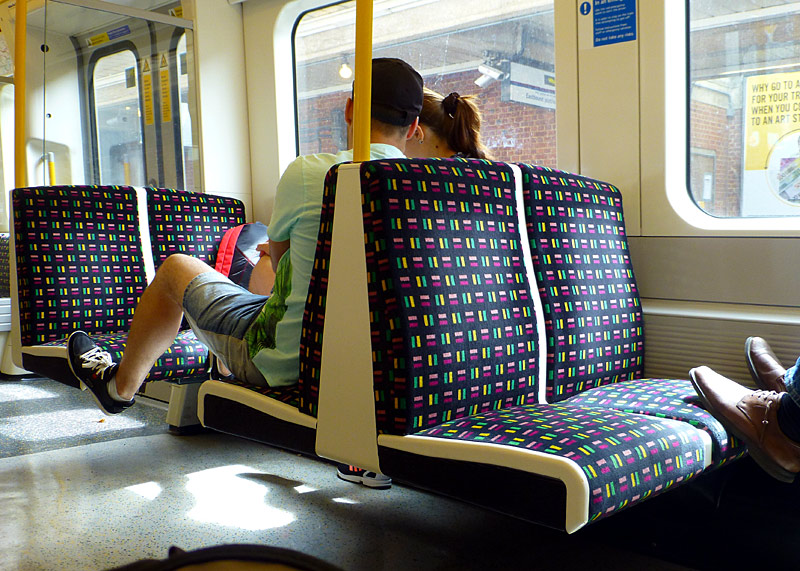
S stock 7+1 trains were ordered as extras for a planned extension to Watford Junction that was cancelled because of a lack of finance. These only have inwards-facing longitudinal seats.
 .
.Preserved Historic Metropolitan Railway / Line Train
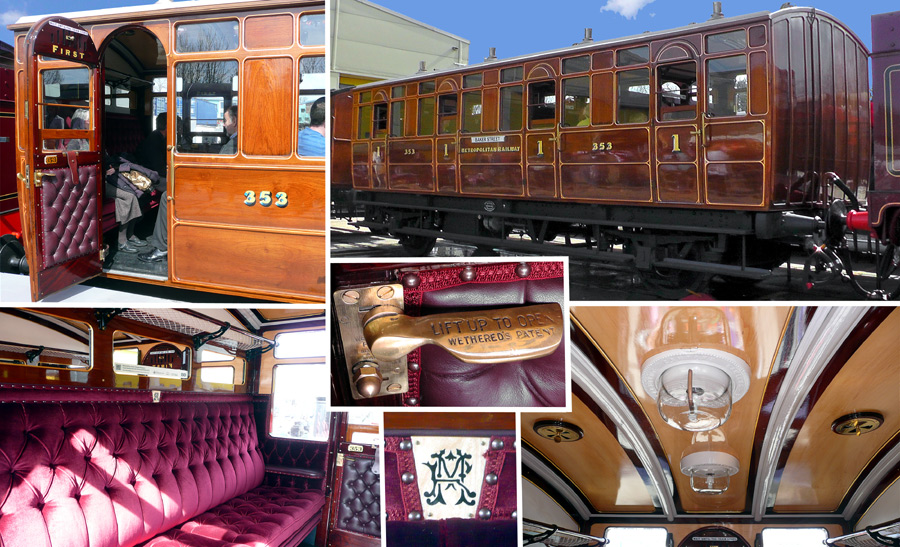
This page (on this website) looks at some surviving historic Metropolitan Railway trains, including the preserved Vintage (1898 and 1900) passenger carriages which were used on the Chesham shuttle service
until replaced in the early 1960's. http://citytransport.info/Vintage.htm
A four carriage train of these carriages was preserved in the 1960's by the Bluebell Railway and sometimes carry's passengers. The Bluebell Railway is easy to reach by train at East Grinstead station.
The Bluebell Railway website: http://www.bluebell-railway.co.uk/
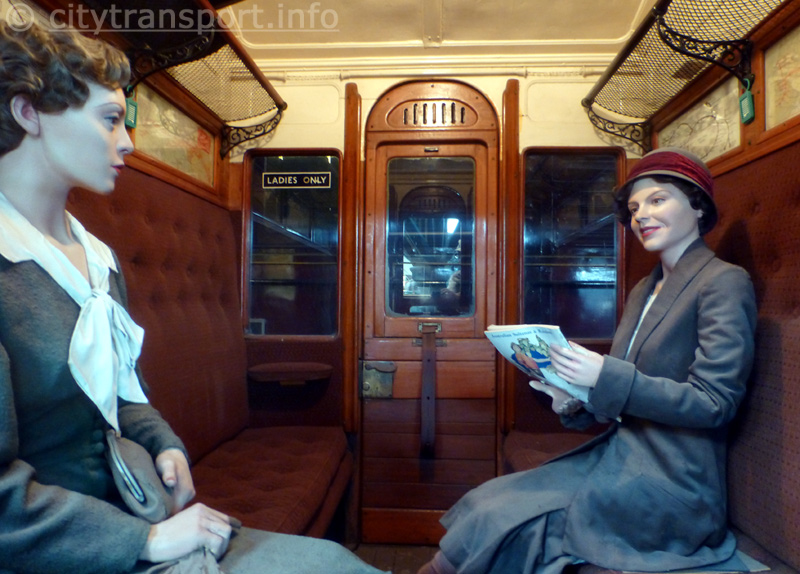
Another of these carriages has been preserved at the London Transport Museum in Covent Garden and one of the compartments (ie: seating areas) has its door open so that visitors can enter and sit in it. The London Transport Museum is very easy to find in the historic leisure-themed Covent Garden area.
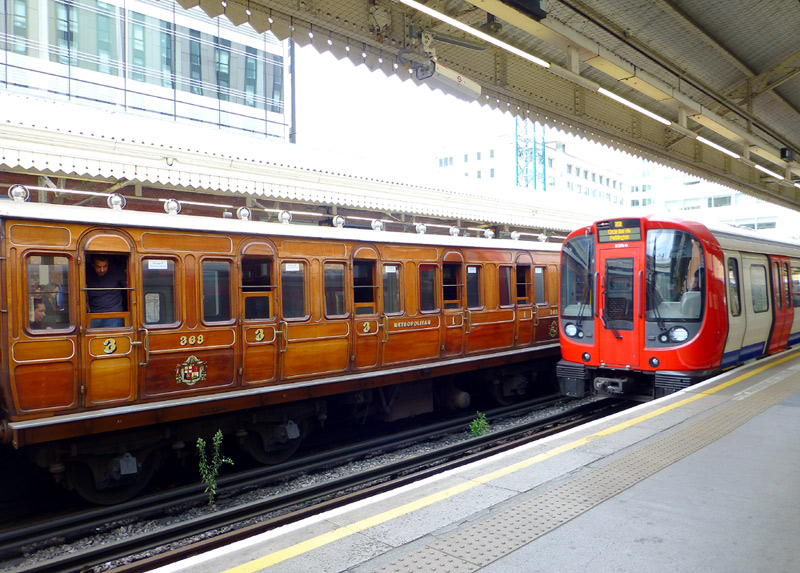
train built 1898 - 1900 and a more
modern S stock train(!) at Hammersmith (Met) station.
The vintage train is sometimes used in passenger
service - at the Bluebell Railway.
the London Transport Museum in Covent Garden.
| Opening Page Fares & Tickets / Photography |
|
|
|
| London Underground Small Profile ‘Tube’ Trains |
|
| Bakerloo Line | |
| Central Line | |
| Jubilee Line | |
| Northern Line | |
| Piccadilly Line | |
| Victoria Line | |
| Waterloo & City Line | |
|
|
| London Underground Large Profile ‘Subsurface’ Trains |
|
| Circle Line | |
| District Line | |
| East London Line | |
| Hammersmith & City Line | |
| Metropolitan Line |  |
|
|
| National Rail ‘Tube’ Trains | |
| Northern City Line | |
| Elizabeth Line (Crossrail Line 1) | |
| Crossrail Line 2 | |
|
|
| Other National Rail Trains | |
| London Overground | |
|
|
| Local Light Railways | |
| Docklands Light Railway | |
| Croydon / London Tramlink | |
|
|
| General Information | |
| Main National Rail Stations Fast Regional Services Overhead Wire & 3rd Rail Trains |
|
| Busier Suburban Stations In Zones 1-4 With A Wider Variety Of Trains To See |
|
| Station Architecture & Features | |
| Shared Service Routes | |
| Further Information Resources To Visit In Person Or Online |
|
|
|
| Single Page Version Of This Guide |
|

