
Visitors to London who are also transport enthusiasts (‘railfans’) sometimes ask for advice as to the ‘best’ things to see on London’s railway network. This page is part of a guide which aims to answer that question.
If this is the first time you have reached these pages then it is best to go to the Opening Page which sets the scene, explains the difference between the small and the large profile trains, offers advice on the best type of ticket to buy and photography tips.
Alternatively, it is possible to view everything on one page
|
| Northern City Line |
|
| Below / Above Ground |
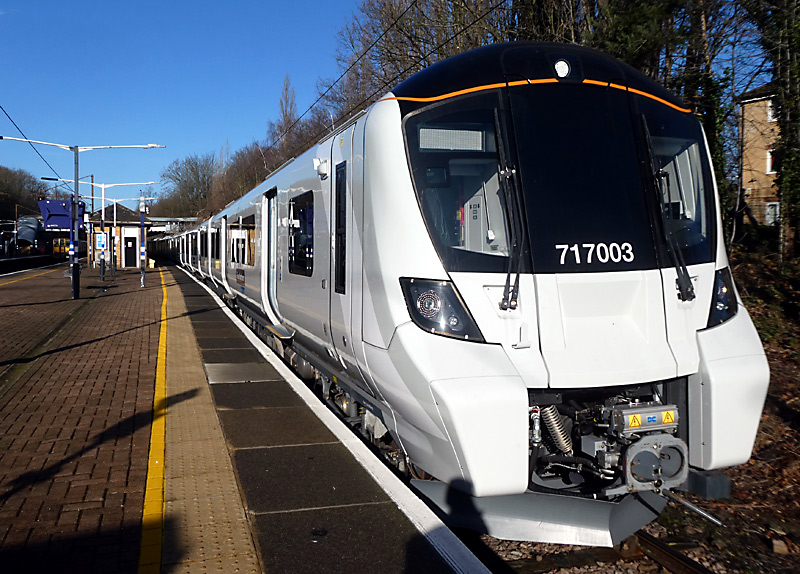
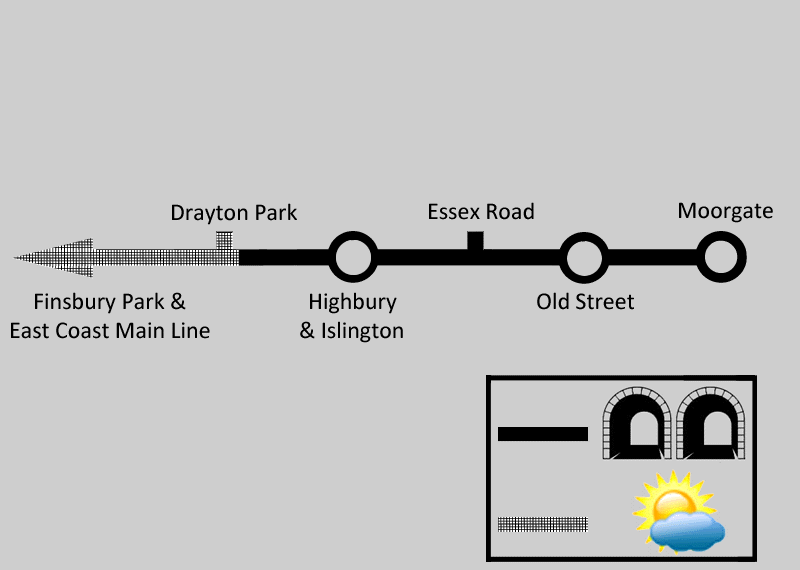
Below ground just south of Drayton Park - Moorgate.
Above ground the rest of the route.
Click map to see larger version in a new window! 
| General Information |
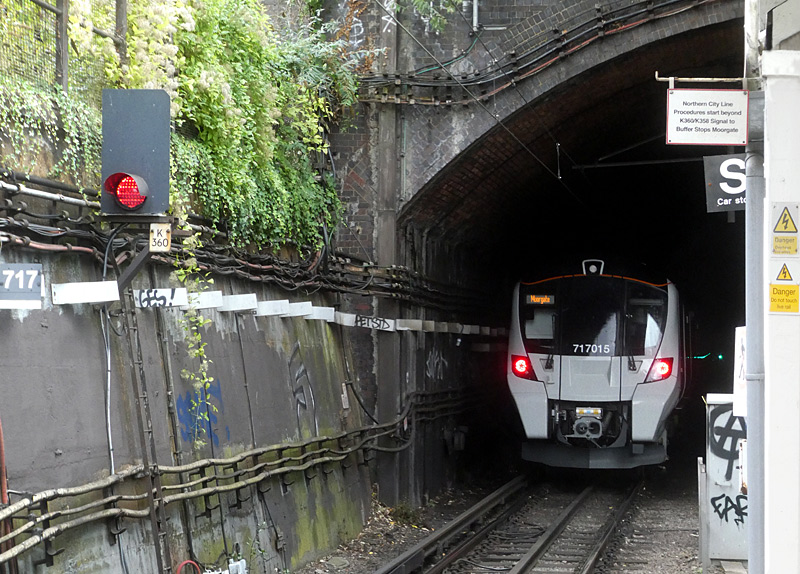
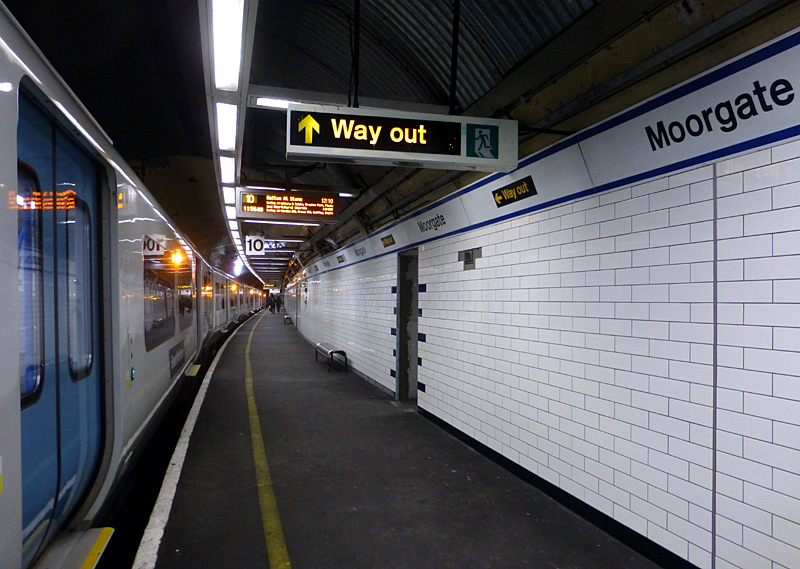
This is London‘s first deep level ‘tube’ line to be built for large profile trains. The southern terminus is at Moorgate (platforms 9 & 10) from where trains travel deep underground as far as Drayton Park, which is in an open air cutting and where the remains of a former depôt can be seen next to the northbound track.
Between Moorgate and Drayton Park the trains are powered via an electrified third rail; at Drayton Park they switch between third rail and overhead wire power supply systems and north of here they operate as ordinary surface suburban trains providing ‘all stations’ services along the East Coast Main Line - which is the route used by trains from London‘s Kings Cross station heading to faraway cities such as York, Leeds, Newcastle-Upon-Tyne, Edinburgh and Aberdeen.
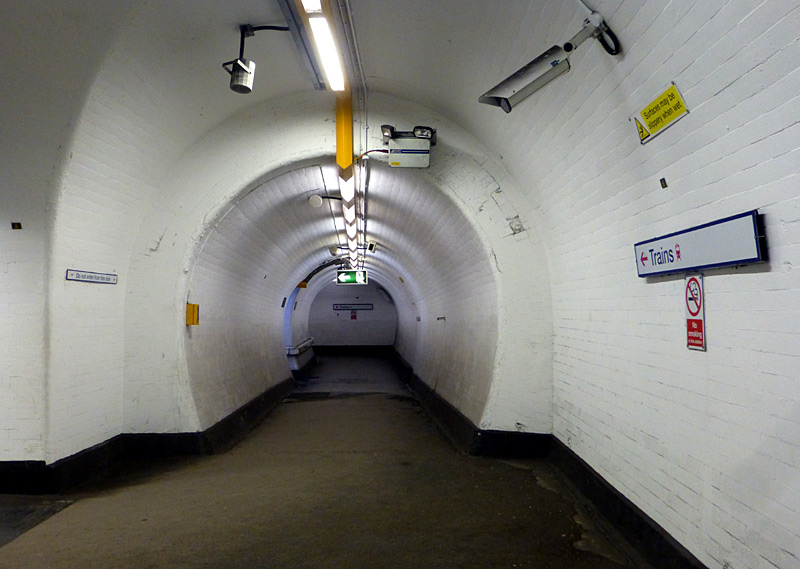
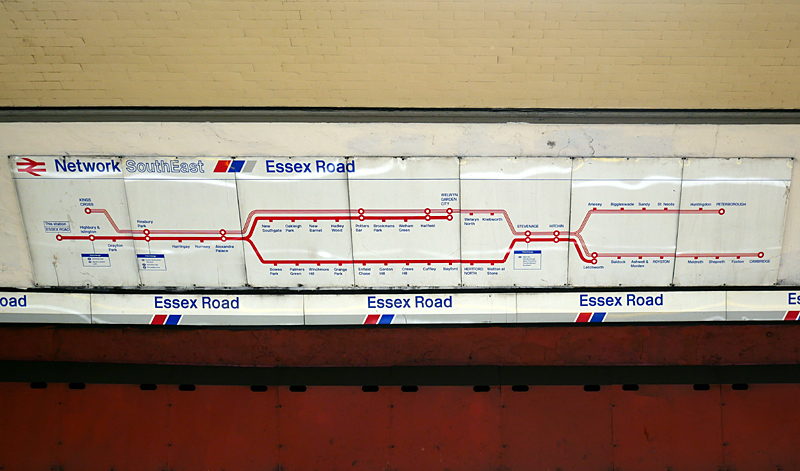

Between 1939 and 1975 this route used London Transport's small profile tube trains. Nowadays this line is not usually shown on UndergrounD maps but being an underground railway in London it simply had to be included in this guide.
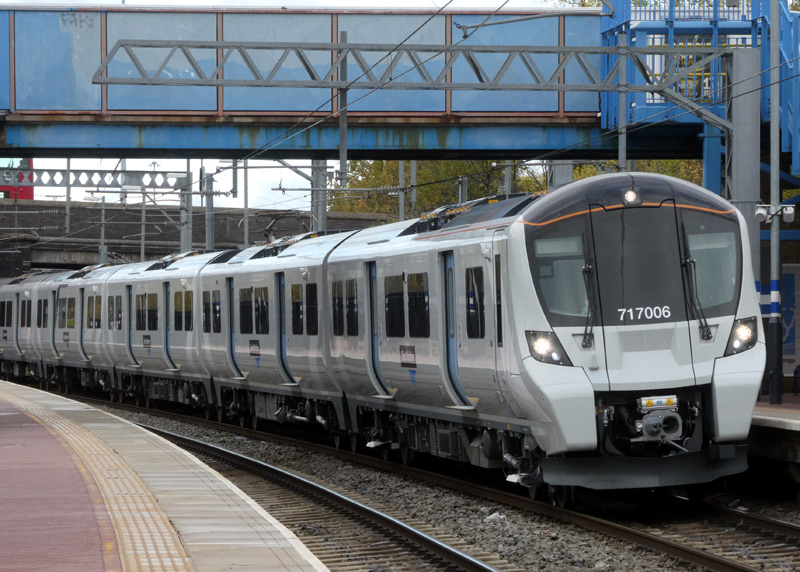
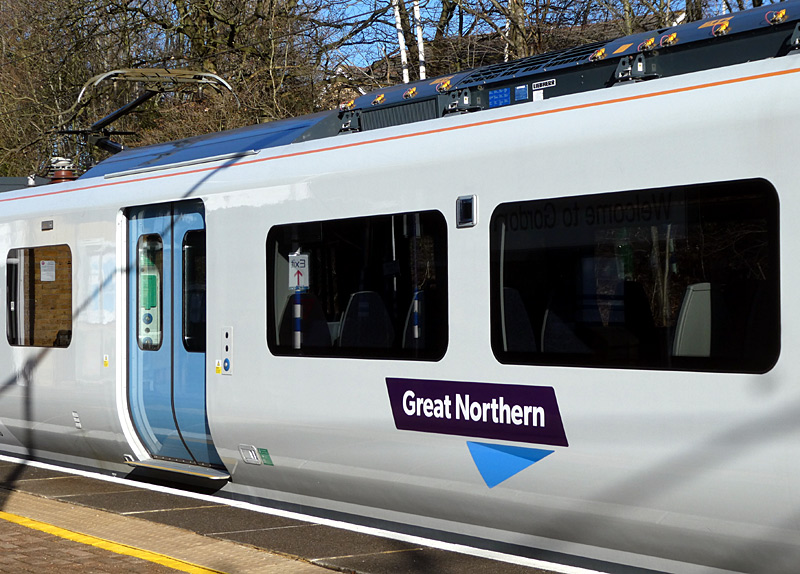
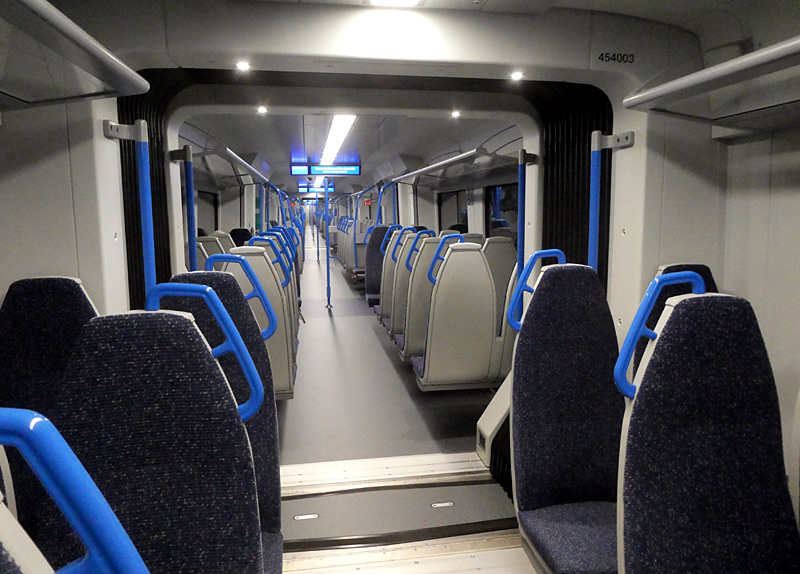
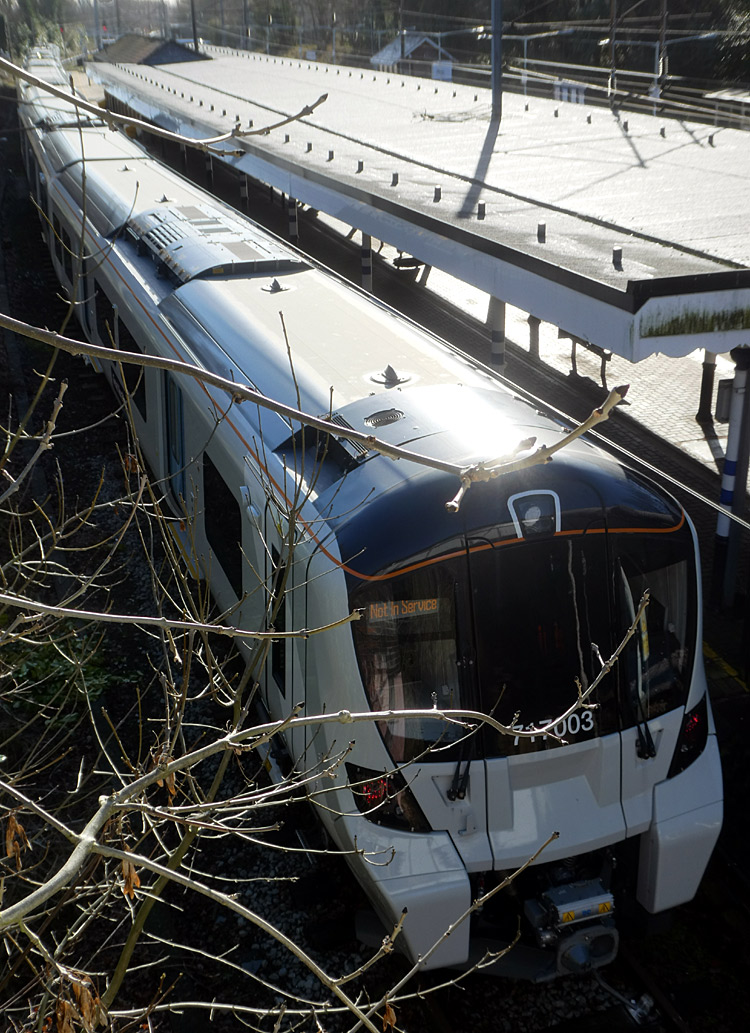
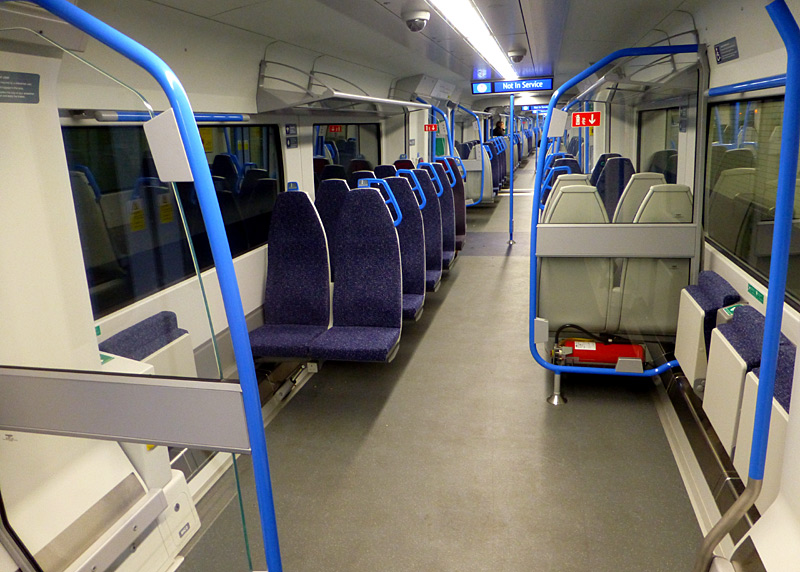
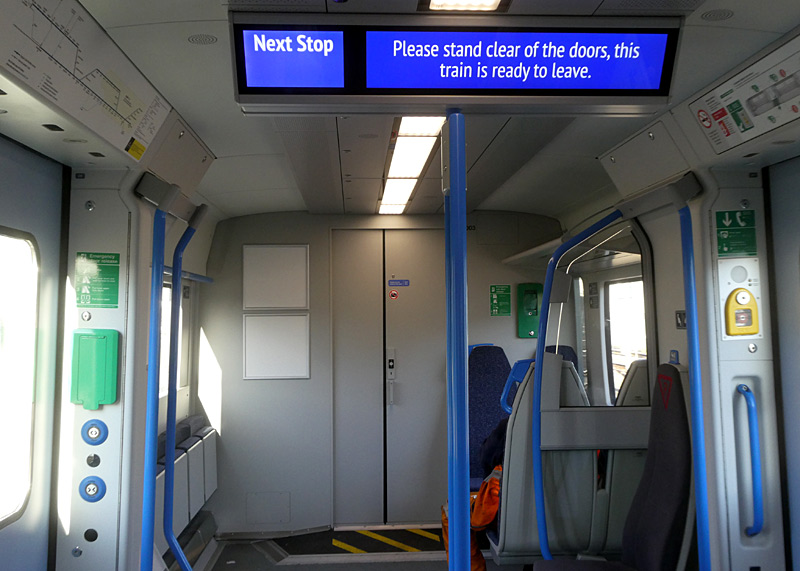
Present-day services are provided by Seimens Desiro City Class 717 trains as part of the ‘Thameslink, Southern, Great Northern’ (TSGN) mainline railway franchise. These trains are six carriage variants of the fully walk-through air-conditioned Seimens Desiro City Class 700 trains used on the Thameslink service.
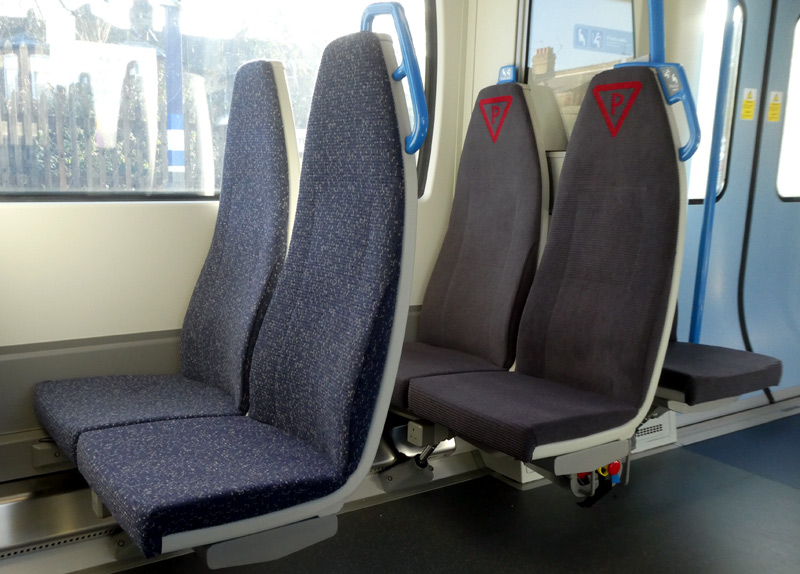
However there are a few small differences; these include the 717's having power sockets under the seats and the train ends also including some folding steps. This is a legal requirement to make it is possible for an emergency evacuation of the train via the train ends when travelling through the single track tube tunnels. Also the 717's do not have toilets.
| Extra Information |
Why Larger Tunnels?
The reason why the Northern City line has larger tunnels than London's other deep level tube lines* is because when it was built (in 1904 by The Great Northern & City Railway [GN&CR]) the aim was to allow trains from the Great Northern Railway (GNR) to reach the City area of London (ie: the Financial District). However the GNR did not favour this so the GN&CR remained physically isolated.
Over the years there were many proposals to extend this line, both to the north and the south, however whilst this was achieved in 1941 for trains which did not carry passengers it was the 1970's before this was achieved for passenger trains. Known as the Great Northern Electrics this is the present-day service.
Whilst an extension south (perhaps to create a north-south cross London service via London Bridge or another major south London station) would seem logical this is not possible. The reason is that to the south of Moorgate station the route is blocked by a Elizabeth Line (Crossrail Line 1) station tunnel and foundations from buildings in the Bank area.
Even if it was possible to extend this line further south another issue would be the very high cost of having to lengthen all the subterranean stations, so that the much longer trains used in south London could call at them.
*This comment applies to the era before the building of the Docklands Light Railway and Crossrail line 1 / Elizabeth line. Also, the London Overground East London / Windrush line tunnels below the River Thames between Wapping and Rotherhithe were originally build as foot tunnels for people and horse drawn carriages - and not trains!
Lothbury Station
The original plans for the GN&CR was for it to extend a short distance further south towards the very heart of London's Financial District with a station named Lothbury. Although work did begin on building this section of railway a lack of funds saw it soon being halted.
Had this station been built it would have created a situation that would have been unique in London. The new station was going to be located so near to Moorgate that a train travelling between Moorgate and Lothbury would have had its front entering one of the stations before its end had left the other station. In other words, the train would have been in both stations at the same time!
Digital Signalling Testbed
In the period 2023 - 2024 the Northern City line was used as a testbed for the first stage of the £1.4 billion government-funded East Coast Digital Programme (ECDP) to introduce a new digital signalling technology known as European Train Control System (ETCS) on the East Coast Main Line (ECML) between London and Grantham. For this trial the ETCS was installed between Moorgate and Finsbury Park.
The ECDP will see the first use of ETCS on a British trunk InterCity mainline and is planned to act as the foundation for future expansion of digital signalling across the network elsewhere in the UK. However it will not be the first use of ETCS in-cab signalling technology here in Great Britain as this is already being used on the central London section of the Thameslink service and on the Cambrian Line in Wales.
The ETCS removes the need for the train driver to follow fixed signals which typically are installed alongside or above the tracks. Instead there is continuous communication between train and track and drivers are continually fed a safe target speed to aim for on a computer screen in their cab. This is expected to create a more punctual and reliable service for passengers - the company which runs the NCL service (Govia Thameslink Railway) has claimed that using ETCS has seen an improvement in service reliability and that signalling-related infrastructure faults are significantly lower.
The first Northern City line trains in passenger service which were signalled using ETCS ran in November 2023. A year later and with all 250 train drivers having been trained to use the new system every service is now signalled digitally. The legacy colour light signalling is scheduled to be deactivated in 2025.
| Opening Page Fares & Tickets / Photography |
|
|
|
| London Underground Small Profile ‘Tube’ Trains |
|
| Bakerloo Line | |
| Central Line | |
| Jubilee Line | |
| Northern Line | |
| Piccadilly Line | |
| Victoria Line | |
| Waterloo & City Line | |
|
|
| London Underground Large Profile ‘Subsurface’ Trains |
|
| Circle Line | |
| District Line | |
| East London Line | |
| Hammersmith & City Line | |
| Metropolitan Line | |
|
|
| National Rail ‘Tube’ Trains | |
| Northern City Line |  |
| Elizabeth Line (Crossrail Line 1) | |
| Crossrail Line 2 | |
|
|
| Other National Rail Trains | |
| London Overground | |
|
|
| Local Light Railways | |
| Docklands Light Railway | |
| Croydon / London Tramlink | |
|
|
| General Information | |
| Main National Rail Stations Fast Regional Services Overhead Wire & 3rd Rail Trains |
|
| Busier Suburban Stations In Zones 1-4 With A Wider Variety Of Trains To See |
|
| Station Architecture & Features | |
| Shared Service Routes | |
| Further Information Resources To Visit In Person Or Online |
|
|
|
| Single Page Version Of This Guide |
|

